


Active peptides in research: design, stability and use cases
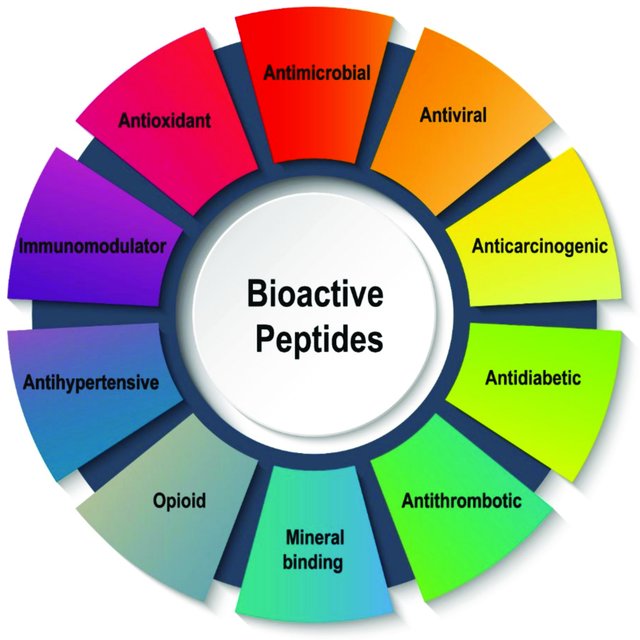
Active peptides are short to medium-length amino acid sequences that show a measurable biological or biochemical effect in a research system. They may interact with receptors, enzymes, membranes, transport proteins or signaling partners. In experimental work, their value depends not only on the sequence but also on purity, solubility, stability, formulation and the assay used to evaluate activity.
This article uses a research-use framing. Many active peptides are studied for therapeutic potential, but a custom peptide supplied for research is not automatically a validated therapeutic product. For Genosphere projects, the practical goal is to produce a well-characterized peptide that can support reliable in vitro, biochemical or preclinical research assays.
What makes a peptide active?
A peptide is considered active when it produces a defined effect under defined conditions. That effect may be receptor binding, enzyme inhibition, antimicrobial activity, cell-penetrating behavior, signaling modulation or another measurable interaction. Small sequence changes can alter charge, hydrophobicity, conformation, protease sensitivity and aggregation tendency, which is why design review matters before synthesis.
For longer or more demanding sequences, Genosphere’s active peptide service focuses on custom synthesis for research applications where length, purity and handling requirements need careful attention.
Design parameters to review before synthesis
- Length and composition: very hydrophobic or repetitive sequences may be difficult to synthesize and purify.
- Charge and solubility: net charge and distribution of polar residues influence handling and assay concentration.
- Stability: protease-sensitive sequences may require terminal protection, cyclization or non-natural residues.
- Purity requirement: screening assays may tolerate one purity level, while quantitative or cell-based assays may require higher purity.
- Controls: scrambled, inactive, labeled or modified controls can make interpretation much stronger.
Stability and peptide modifications
Active peptides can be limited by rapid degradation, oxidation, aggregation or poor solubility. Modifications such as N-terminal acetylation, C-terminal amidation, cyclization, disulfide formation, D-amino acids, labels or linkers can be used to adapt the molecule to the research question. The peptide modification service supports these design options when they are compatible with the sequence and assay.
Not every modification improves performance. A change that increases stability may reduce activity, alter target binding or complicate purification. For that reason, modified and unmodified versions are often compared during assay development.
From single peptides to libraries
When the active sequence is not yet known, peptide libraries can help explore variants around a motif, map structure-activity relationships, or screen overlapping regions of a protein. Genosphere’s peptide library service can support this exploratory phase before committing to a smaller number of optimized candidates.
Quality information that supports reproducible assays
For active-peptide experiments, documentation matters. Molecular weight confirmation, purity analysis, counterion or salt form when relevant, solubility guidance and storage recommendations all influence reproducibility. The broader custom peptide synthesis service should be selected according to the downstream assay rather than only the sequence length.
Applications in research
Active peptides are used in receptor studies, enzyme assays, antimicrobial research, cell-signaling experiments, peptide-protein interaction studies, biomaterials research and structure-activity exploration. In each case, the peptide is one component of the experimental system. Controls, concentration range, solvent compatibility and readout method remain essential for interpreting activity.
Information to provide for a synthesis project
For an active-peptide project, useful starting information includes the sequence, expected activity, acceptable counterion or salt form, target purity, solubility constraints, assay solvent, concentration range and storage conditions. If the peptide will be compared with variants, controls or modified analogues, these should be designed as a set. Planning the whole set early helps avoid results that are difficult to compare because each peptide was produced under different assumptions.