

Protein purification turns successful expression into a sample suited to your intended application. Following expression in E. coli, yeast, insect cells or another host, the protein of interest must be separated from host proteins, cell debris, nucleic acids and other components of the production mixture. Depending on the project, purification may also involve removing residual salts or detergents, separating aggregated forms and transferring the protein into a suitable final buffer. Genosphere Biotechnologies integrates this work into its recombinant protein services, with a strategy tailored to the protein and its intended use.
Purified proteins may be required for functional validation, immunisation, antigen production, biochemical assays, screening, analytical studies or the preparation of a research batch. Each application places different demands on the final sample. Alongside the recombinant protein service offer, the information below explains how a purification project is planned and which details help us prepare a relevant quotation.
Purpose of purification
Purification is defined by more than a purity percentage. The appropriate protocol depends on the protein, the expression host, the quantity required, the presence of an affinity tag, solubility, stability and the experiments planned after delivery.
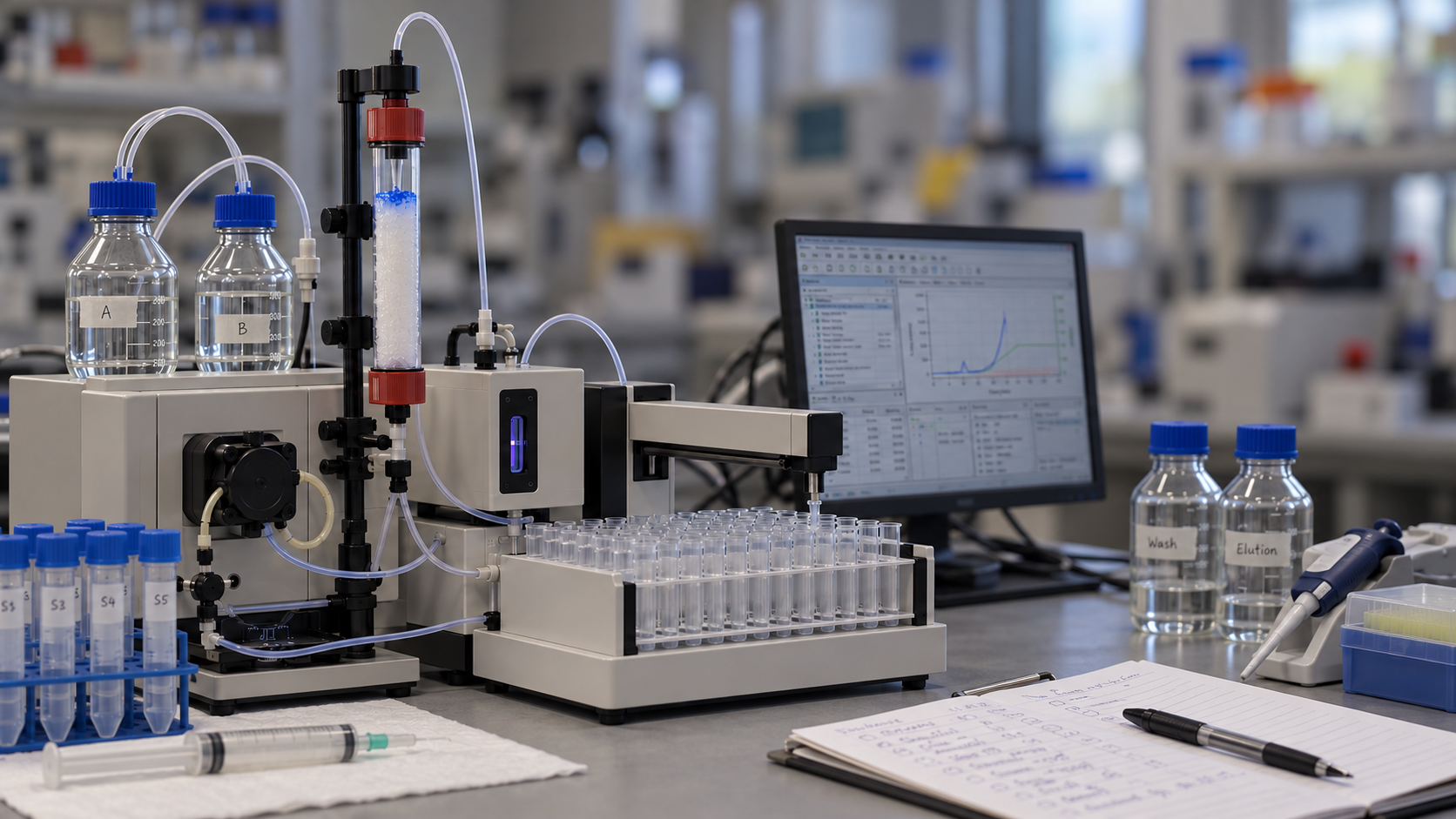
A protein intended for immunisation, an enzyme assay, a protein–protein interaction study or use as an analytical standard may require a different balance of purity, homogeneity and retained biological activity.
The specification may include a target purity, a defined final buffer, a minimum concentration, a soluble or refolded preparation, retention of a required cofactor, tag removal or additional control of aggregates. Handling and storage requirements may also influence the choice of conditions. Where these points have not yet been established, Genosphere can help define the priorities from the protein sequence, available experimental information and intended application.
Purification strategy
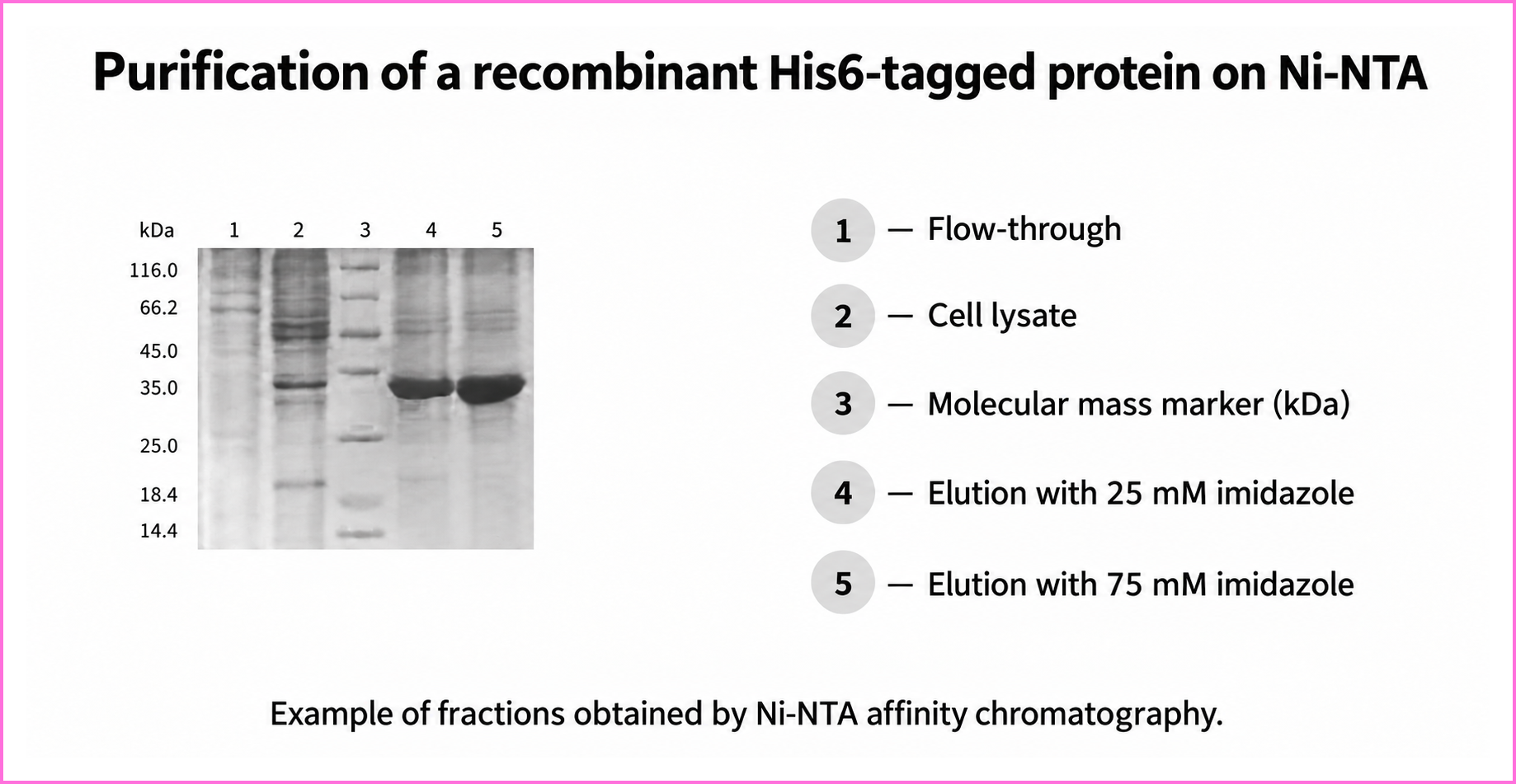
The strategy usually begins with the construct: whether the protein is native or expressed as a fusion, the affinity tag and any cleavage site, sensitive domains, expected molecular mass, isoelectric point and known solubility conditions. These features guide the selection of capture, washing, elution and subsequent polishing steps, as well as the buffers used throughout the process.
- Affinity purification provides selective capture when the protein carries a suitable tag or has another exploitable affinity interaction. Binding, washing and elution conditions are selected to balance recovery and removal of contaminants.
- Ion-exchange chromatography separates proteins according to their charge under the chosen buffer conditions and may provide an additional means of removing host proteins or other contaminants.
- Size-exclusion chromatography separates species according to their size in solution and can help improve sample homogeneity, separate aggregates or prepare material for a sensitive downstream analysis.
- Buffer adjustment, including buffer exchange where appropriate, places the purified protein in conditions suited to its stability and the planned experiment.
The combination and order of these steps depend on how the protein behaves during the project. A highly expressed but insoluble protein, a membrane protein, a protein toxic to the host or one sensitive to oxidation may require dedicated optimisation. Recovery, purity and stability are considered together when deciding whether further development or an additional purification step is appropriate.
From expression to purified sample
Purification can be integrated into a complete project involving expression in E. coli, expression in yeast or production using a baculovirus/insect-cell system. In this setting, the expression host and construct design are selected from the outset with purification in mind. Tag placement, potential cleavage, protein localisation and the expected form of the expressed material can all influence the subsequent workflow.
Purification requirements may also arise in a project already under way. Available information about the sequence, plasmid, expressed construct or existing sample helps establish a practical starting point. Previous expression results, solubility observations, purification attempts, recovery estimates and storage conditions are particularly useful. The scope of any work involving customer-supplied material is agreed during project review, taking account of the material available and the intended outcome.
Quality control and delivery
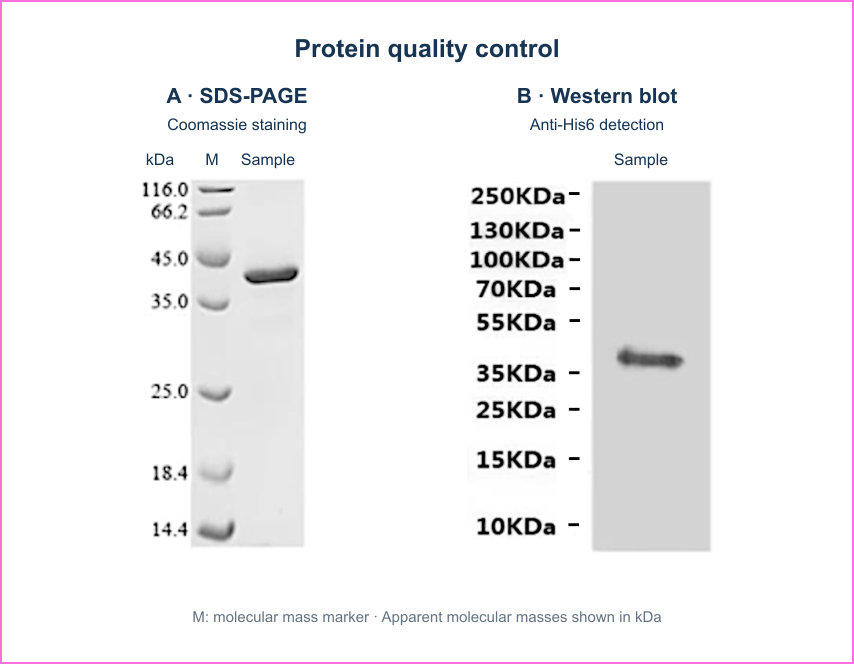
Quality control is defined according to the project and may include analysis of the protein profile, an estimate of purity, assessment of apparent molecular mass, measurement of protein concentration and documentation of the final preparation conditions. These checks help interpret the sample and its suitability for the planned work. The accompanying information should identify the final buffer, describe the preparation and record any relevant limitations observed during the project.
For some applications, an intermediate level of purity is sufficient to continue development or carry out an initial evaluation. For others, an additional polishing step may be appropriate to improve purity or homogeneity. The quotation specifies the selected preparation steps, associated quality controls and delivery conditions. Any application-specific testing or additional acceptance criteria should be discussed at the start of the project.
Information useful for a quote
For a protein purification request, please provide the sequence or expected molecular mass, the expression system proposed or already used, any affinity tag and the amount of material required. The target purity, desired concentration, final buffer and intended application help define the expected deliverable. If a construct or sample is already available, a brief description of its preparation and current storage conditions is also valuable.
Please include any difficulties already encountered, such as low expression, inclusion bodies, proteolysis, aggregation, loss of activity or instability during storage. Previous gels, purification profiles or experimental notes can help identify a suitable starting point and avoid repeating unsuccessful conditions. Together, these details distinguish a straightforward purification from a project requiring method development and allow the proposed work to reflect the protein’s actual requirements.
Related services
If your project concerns immunoglobulins, please see our antibody purification service. For recombinant proteins, you can request a protein purification or protein expression quote, describing the sequence, expression system, available material and intended application. We can then review the project scope and discuss the preparation and quality-control options appropriate to your research.