

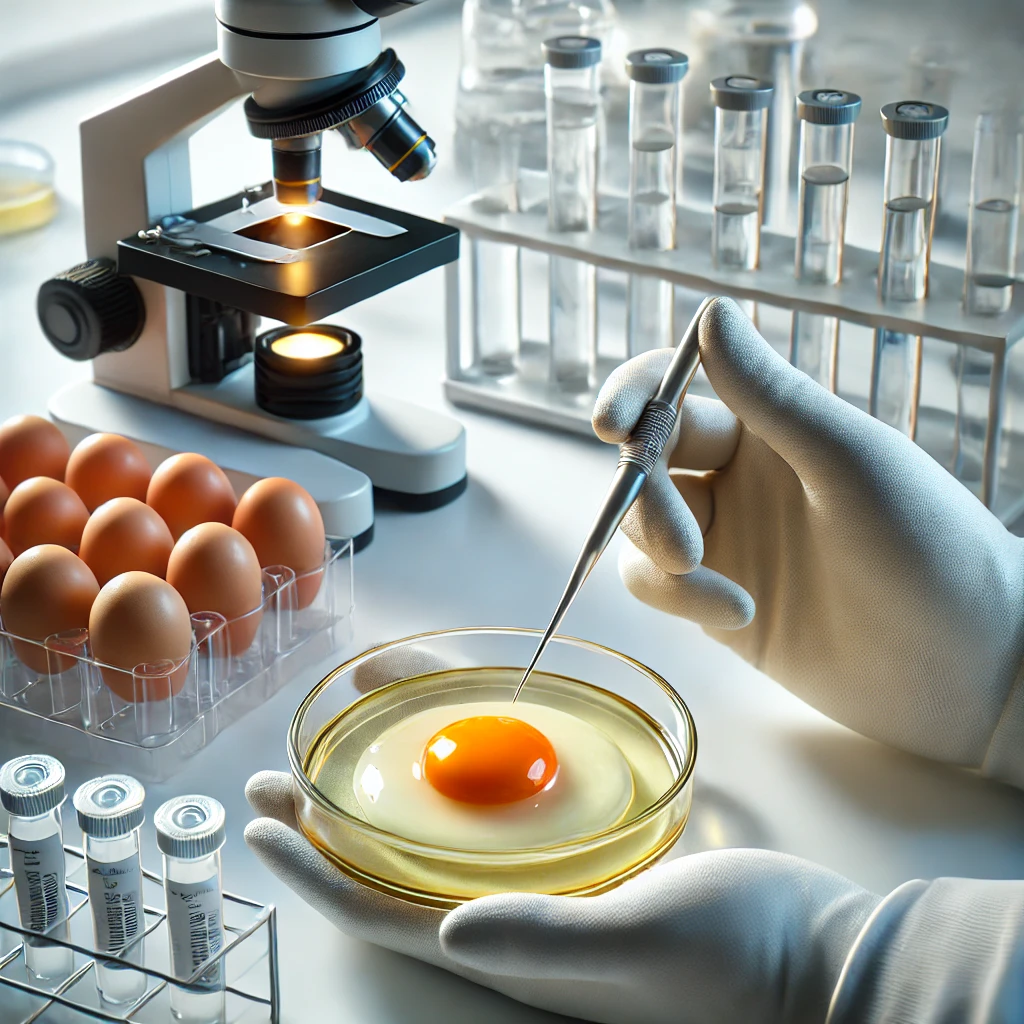

Chicken IgY antibodies in research: advantages and limits
Chicken IgY antibodies are immunoglobulins produced by hens and recovered mainly from egg yolk. They are useful research reagents when a project benefits from phylogenetic distance between birds and mammals, reduced interaction with mammalian Fc receptors, or non-invasive antibody collection. IgY can be a strong option for detecting conserved mammalian proteins, producing antibodies against weakly immunogenic targets, or reducing background in assays that use mammalian samples.
The value of an IgY project still depends on the same fundamentals as any custom antibody project: antigen design, host response, purification method and validation in the intended assay. IgY is not automatically better than rabbit, mouse or goat antibodies; it is better when its biological and technical properties match the target and application.
Why choose IgY?
Because chickens are evolutionarily distant from mammals, they may generate a stronger response against mammalian proteins that are highly conserved among mammalian hosts. IgY antibodies also do not bind mammalian Protein A or Protein G efficiently and generally show reduced interaction with mammalian Fc receptors, which can lower background in some immunoassays.
- Phylogenetic distance: useful for conserved mammalian proteins.
- Non-invasive collection: antibodies are recovered from egg yolks rather than repeated terminal bleeding.
- Assay background: IgY can reduce Fc-mediated interactions in mammalian sample matrices.
- Antigen flexibility: proteins, peptides and conjugated antigens can all be considered depending on the target.
Antigen strategy
The antigen should be selected according to the assay and the biology of the target. A full protein may expose conformational epitopes, while a peptide can focus the immune response on a defined sequence. If the target is a conserved mammalian protein, chicken IgY may be especially relevant because the avian immune system can recognize epitopes that mammalian hosts tolerate poorly.
Genosphere’s Chicken IgY antibody service supports custom IgY projects from antigen planning through production. For targets where a recombinant antigen is preferred, the anti-protein antibody service can help align antigen production and immunization strategy.
Purification and handling
IgY purification differs from common mammalian antibody workflows. Because IgY does not behave like IgG on Protein A or Protein G, purification typically relies on precipitation, delipidation and specific chromatographic strategies. For demanding assays, additional cleanup or antigen-affinity purification can improve signal-to-background ratio.
The antibody purification service is therefore an important part of project planning rather than a final administrative step. The best purification route depends on whether the antibody will be used for ELISA, Western blot, immunostaining, immunoprecipitation or another assay.
Validation expectations
IgY antibodies should be validated in the same way as other custom antibodies. Useful evidence includes antigen-specific ELISA, comparison with pre-immune material, peptide or antigen competition when relevant, detection of positive and negative samples, and confirmation that the antibody performs in the final assay conditions.
For researchers comparing host species, IgY can also be tested alongside a mammalian antibody format. The right choice is the reagent that gives specific, reproducible signal in the intended sample context.
Research applications
Chicken IgY antibodies are used in ELISA, Western blot, immunohistochemistry, immunocytochemistry, affinity capture and assay development. They are especially interesting when mammalian sample background or target conservation limits more conventional antibody strategies. Genosphere’s broader custom antibody development services can help decide whether IgY, rabbit, mouse or another host is the best fit.
When IgY may not be the best choice
IgY is not the default answer for every antigen. If the final workflow depends on Protein A or Protein G capture, standard anti-mammalian secondary antibodies, or established IgG-specific detection reagents, the assay may need adaptation. Some laboratories also prefer rabbit antibodies when they need a very large ecosystem of secondary reagents and reference protocols. These practical constraints should be reviewed before choosing the host species.